
Tuscan Salmon Recipe
What’s up guys. Allow me to introduce to you your new favorite weeknight or meal prep recipe. Today we’ll be making Tuscan salmon.
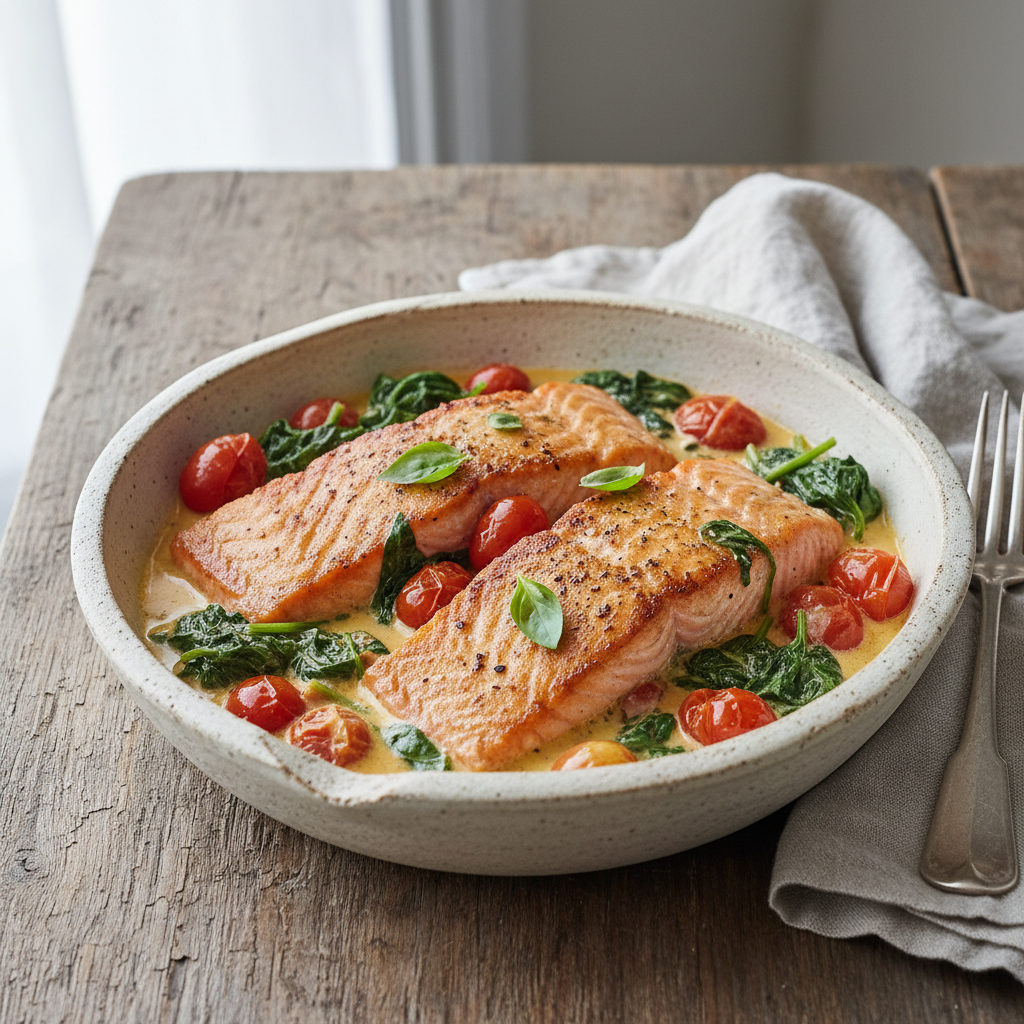
Why You’ll Love This
The garlic really softens up nicely in the oven and the flavor gets a bit more concentrated and kind of sweet. And the best part is it’s super easy to make.
This whole recipe comes together in about 30 minutes. This is super quick and easy for the weeknights, especially if you prep your roasted garlic in advance.
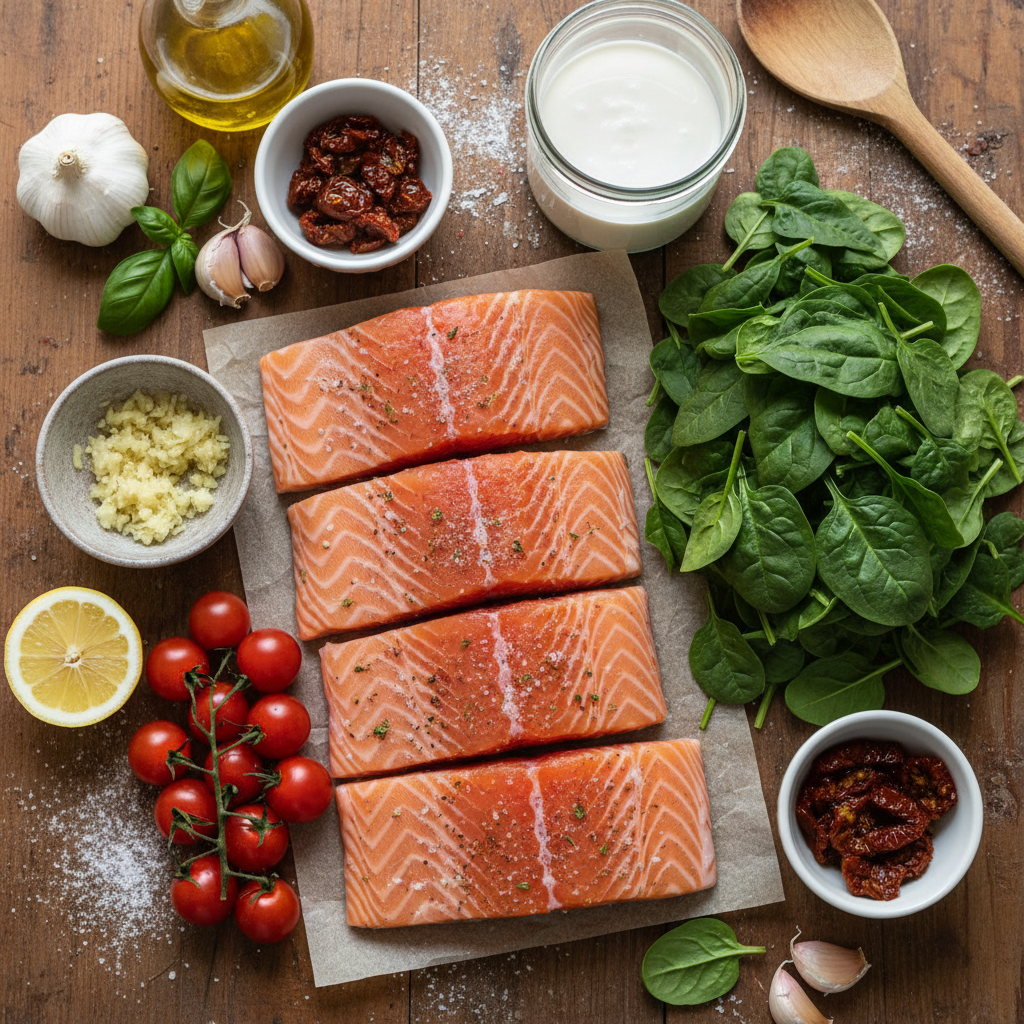
Ingredients
- For Roasted Garlic:
- one head of garlic
- a little olive oil
- some salt and pepper (or all-purpose seasoning: salt, pepper, garlic, and onion powder)
- For Pasta:
- pasta noodles (spaghetti, linguine, fettuccine, or penne)
- For Salmon:
- three fillets of salmon (about six to eight ounces each)
- all-purpose seasoning (salt, pepper, garlic, and onion powder)
- about a tablespoon of avocado oil
- one tablespoon of butter
- For Sauce:
- cherry tomatoes
- half of a yellow onion
- a tablespoon or two of capers
- roasted garlic cloves (from one head)
- a couple handfuls of fresh spinach
- one-fourth cup of dry white wine (Chardonnay) OR some chicken stock
- heavy cream or half and half
- all-purpose seasoning
- some smoked paprika
- some Cajun seasoning (optional)
- A few red pepper flakes
- about a fourth cup of fresh Parmesan cheese
Instructions
- Preheat the oven to 400 degrees.
- Cut the end off the garlic.
- Peel some of the skin off.
- Place that garlic right in the center of that aluminum foil.
- Drizzle it with a little olive oil.
- Hit it with some salt and pepper or you can use all-purpose seasoning which is a blend of salt, pepper, garlic, and onion powder.
- Wrap it as tightly as you can in that aluminum foil and then place it in the oven for about 30 to 40 minutes.
- Now we are going to go ahead and boil our pasta noodles.
- Make sure you salt your pasta water.
- Peel the skin off the onion.
- Use a sharp knife and dice the onion into small bite-sized pieces.
- Move on to chopping our cherry tomatoes in half.
- Season the salmon fillets up with all-purpose seasoning.
- Season the skin side first.
- Flip them over, then show the other side the same love and attention that they deserve.
- Make sure you season them adequately.
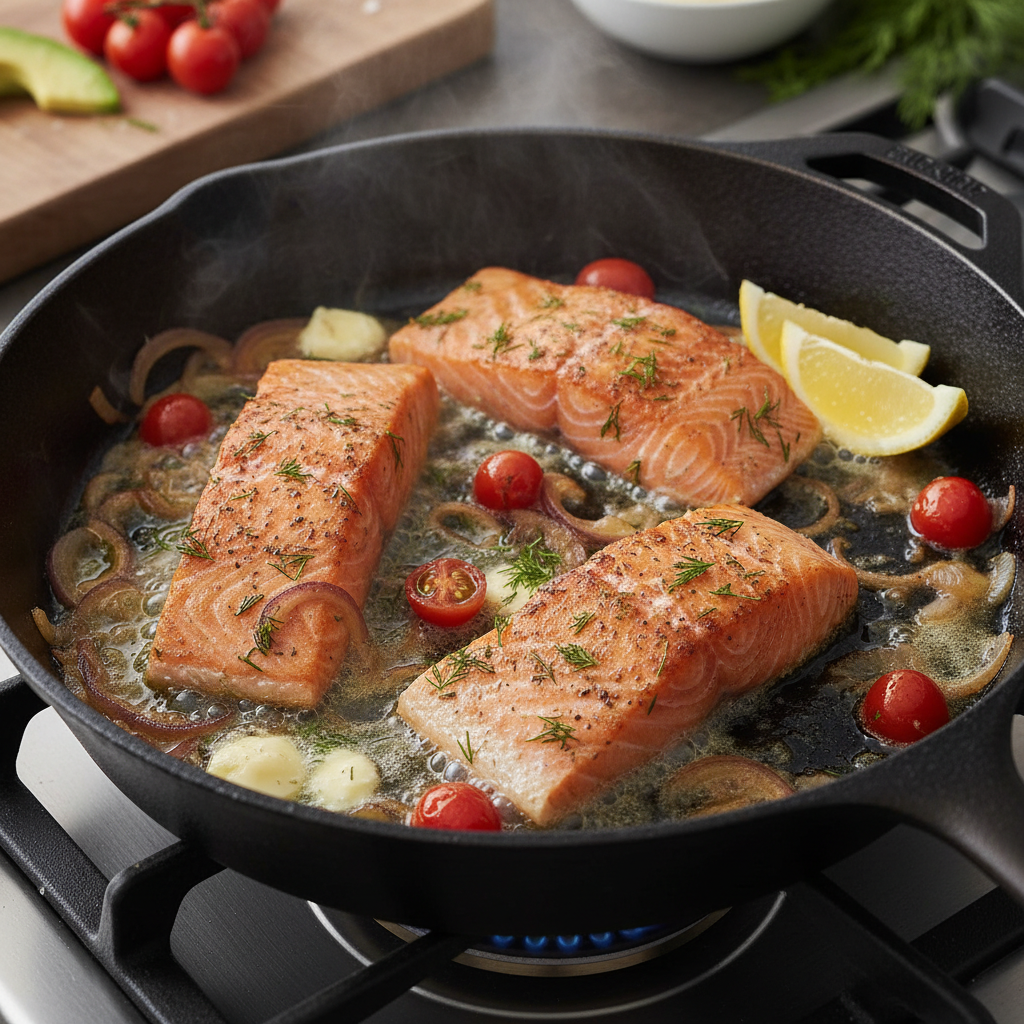
- Warm our cast iron skillet over medium-high.
- Add about a tablespoon of avocado oil and one tablespoon of butter.
- Once the butter melts, go in with the salmon.
- Always lay the meat away from you and press down firmly to get maximum surface area contact.
- Use the back of your fingers to press down and make sure that that salmon is making contact with the cast iron skillet.
- After 60 to 90 seconds, or when the color that you want is achieved, we’re going to go ahead and flip the salmon over.
- Give the skin side another 60 to 90 seconds.
- Then we’re going to remove the salmon.
- Go in with that half of an onion that we diced up earlier.
- Turn the heat down to low and allow the residual heat from the skillet to cook down the onion.
- Get in there with your spatula, move the onion around a bit.
- I’m going in with a tablespoon or two of capers.
- Now, my friends, we’re going in with that delicious roasted garlic that we made earlier.
- Give that a good mix.
- Now we’re going in with those cherry tomatoes.
- Allow those tomatoes to cook down.
- We’re going in with a couple handfuls of fresh spinach.
- Allow the steam to cook down the spinach.
- Now we’re going in with one-fourth cup of dry white wine.
- Increase your heat to medium-high to burn off the alcohol.
- If you don’t want to use the wine, guys, you can just use some chicken stock for that.
- Once that’s come up to a simmer, we’re going in with our heavy cream or half and half.
- Give that a good mix and bring that up to a simmer.
- We’re going to add a little seasoning here, a little all-purpose seasoning, some smoked paprika.
- You can throw some Cajun seasoning in there if you want to.
- A few red pepper flakes for some heat.
- Taste as you go and adjust the flavor to your preference.
- I’m going in with about a fourth cup of fresh Parmesan cheese.
- You want to do that over medium-low heat, so reduce the heat when you add the cheese.
- Give that a good mix.
- Allow that cheese to melt beautifully.
- Once the sauce is right where you want it, we’re going to add those salmon fillets back into the sauce and allow the salmon to finish cooking in that sauce.
Cooking Tips
You can use roasted garlic to enhance the flavor of the sauce like we’re going to do today. You can also add it to your garlic bread. You can put it in mashed potatoes.
The garlic really softens up nicely in the oven and the flavor gets a bit more concentrated and kind of sweet.
You can do this in bulk also if you want to do like three or four heads of garlic, that’ll work too.
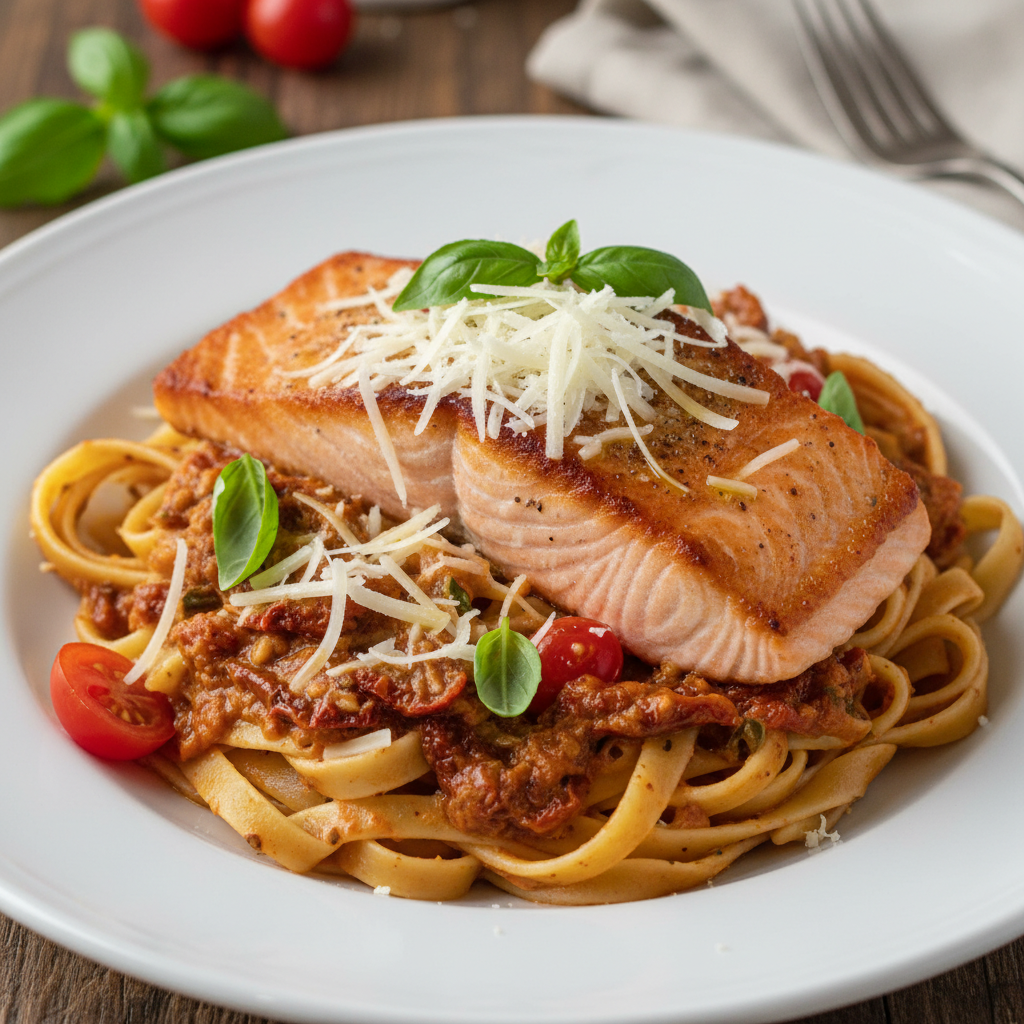
You can use whatever pasta you want. Today we’re using spaghetti noodles, but you can use linguine or fettuccine, even penne.
Only going to need half of the yellow onion for this recipe. You can save the other half for your omelets in the morning.
There’s really no right or wrong way to do this, guys. Just do whatever feels comfortable for you.
I like to leave the skin on for mine.
This is a low-sodium seasoning, so if your all-purpose seasoning at the house isn’t low-sodium, you might want to go a little bit lighter.
If you hate the salmon skin, guys, you can go ahead and remove that. I enjoy the taste of the salmon skin, but most importantly for this recipe, the skin really helps the salmon stay intact when it kind of braises in that sauce later.
Capers have a bit of a lemon or citrus flavor.
You can throw the whole head of garlic in there if you really like the garlic flavor.
It may look like a lot right now, but we all know shrinkage is real, especially when it’s cold outside or when we’re talking about spinach.
Make sure you taste as you go.
If you don’t want to use the wine, guys, you can just use some chicken stock for that.
As that heavy cream simmers a bit, it’s going to reduce and thicken up.
The sauce will continue to thicken up as it cooks down and reduces.
You want a nice smooth sauce. Smooth as in a three-day weekend.
Once the salmon hits 135 to 140, it’s done, and we know it’s done because we’re using a digital food thermometer.
Let me know what you think in the comments, guys. Let me know what other recipes you want to see as we head into the holiday season.